
Choosing school furniture is not only a matter of classroom appearance. Desks and chairs that suit the height and daily needs of students help schools create more comfortable, organised and adaptable learning environments.
Why adjustable classroom furniture matters
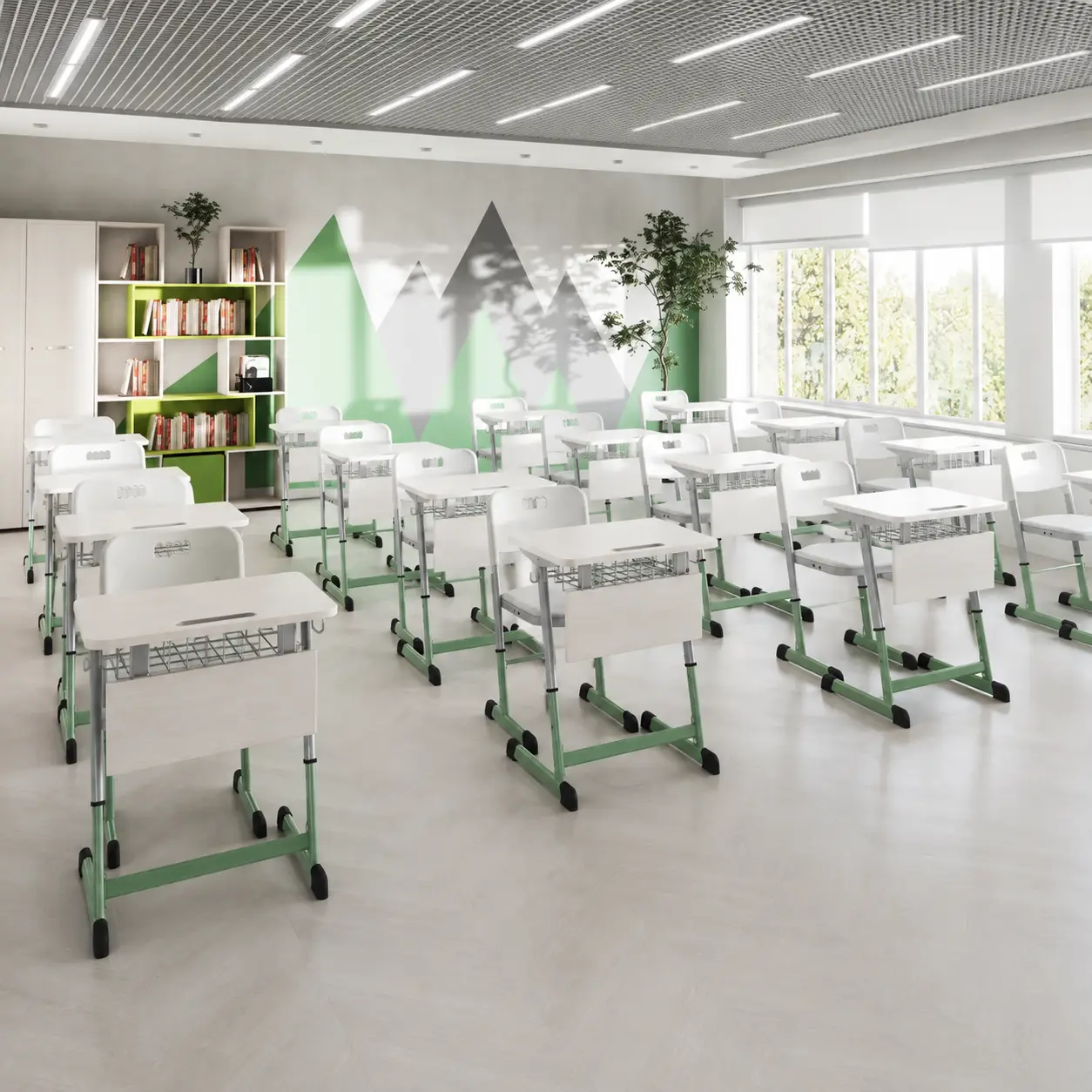
Students of different ages and heights use the same learning spaces every day. Fixed furniture can work for a narrow age range, while adjustable desks and chairs give schools more flexibility when classrooms are shared, reconfigured or used over several academic years.
For procurement teams, adjustability can also simplify long-term planning: instead of replacing furniture as student groups change, a well-designed adjustable system can remain useful across a wider range of classroom needs.
Start with student height groups
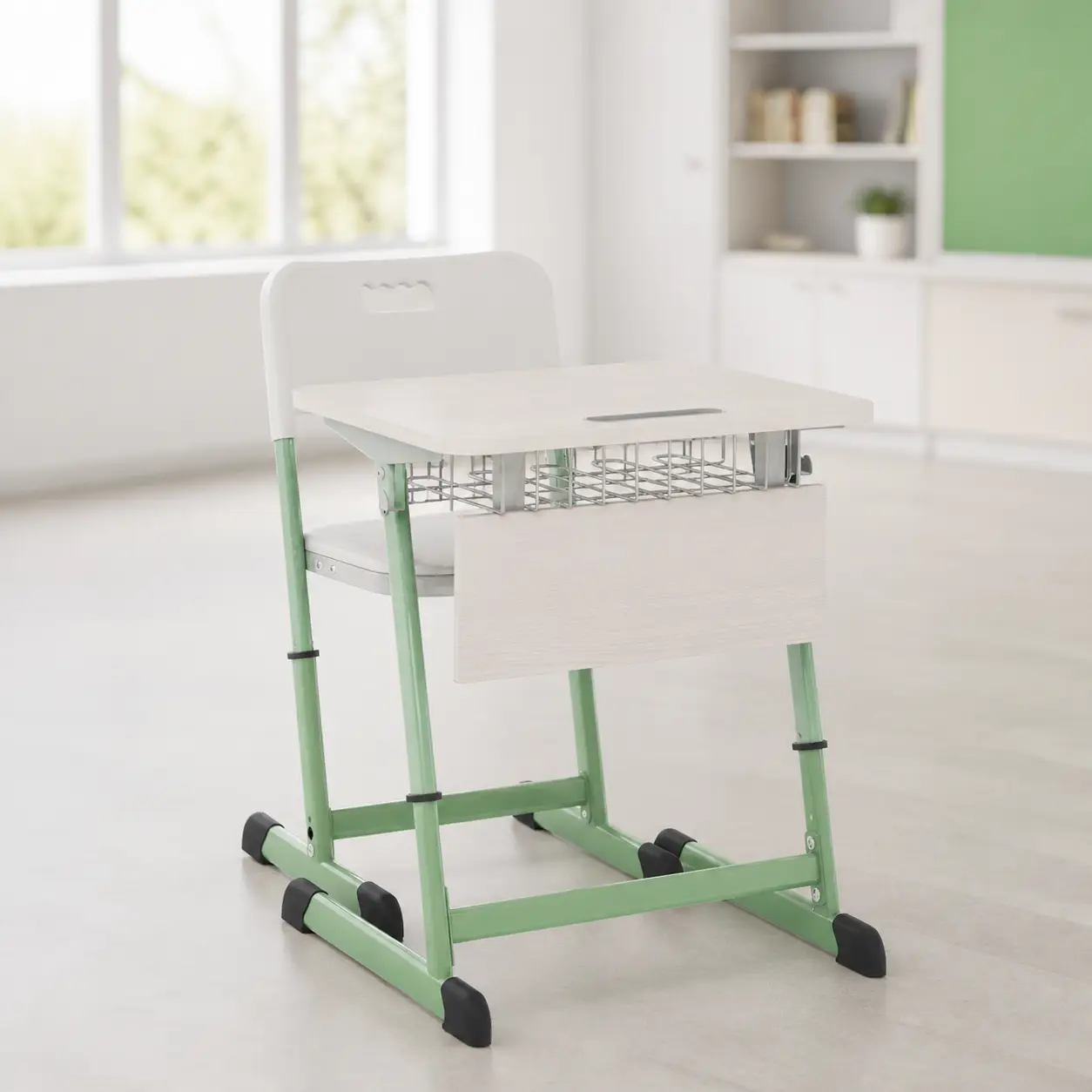
The first step is to match the desk and chair configuration to the intended student height groups. A suitable learning position should allow students to sit with both feet supported, shoulders relaxed and a clear, practical writing surface in front of them.
- Choose a desk and chair system designed for the relevant age and height range.
- For mixed-age environments, prioritise models with simple, secure height adjustment.
- Specify the desk and chair together, rather than selecting them independently.
- Check that adjustment points are easy for staff to use and protected from accidental loosening.
Look beyond dimensions
Dimensions matter, but a classroom desk is also a working tool. Consider how students, teachers and facilities teams will use it during a full school day.
- Stable construction: a robust frame should support everyday writing, computer work and classroom activities.
- Durable surfaces: tabletops should be easy to clean and suitable for regular use.
- Safe detailing: rounded edges, secure fittings and stable feet are important in busy classrooms.
- Storage: integrated book boxes, hooks or shelves can help keep learning materials organised.
- Maintenance: specify finishes and components that can be serviced or replaced when needed.
Planning one-seat and two-seat desk layouts
One-seat desks make it easier to create flexible classroom layouts, individual work zones and accessible circulation. Two-seat desks can be an efficient choice where the room layout and teaching method support paired learning.
Before choosing a configuration, review the room plan, class size, access routes and the position of teaching walls, windows and storage. The best solution is not always the maximum number of desks; it is the layout that gives students and teachers enough room to work effectively.
Questions to ask a school furniture supplier
- Which height groups does this model support?
- Can desks and chairs be specified as a coordinated set?
- What materials are used for the frame, tabletop and edge protection?
- How are products packed for export and installation?
- Are technical documents, assembly instructions and product specifications available?
- Can the supplier help plan a complete classroom layout?
A practical approach for school projects
For a new school, refurbishment or phased furniture programme, start with a room-by-room brief. Define the age group, activities, capacity, storage requirements and future flexibility of each space. This makes it easier to select furniture that supports teaching today and remains useful as needs develop.
TROYA manufactures educational furniture for classrooms, specialist rooms and shared learning areas. Our team can help you choose adjustable student desks and chairs, prepare a product specification and discuss a tailored export proposal.